


The Supreme Court Answered a Legal Question. Not a Moral One.

Updated: Aug 28
The plight of the Haitian people has long been a matter of deep personal concern to me.
Over the years, I traveled to Haiti on four missionary trips with Ben Hill Baptist Church in Atlanta, Georgia.
Our mission was to deliver food, medical supplies, and other essential resources to organizations caring for children and families in need. Those experiences gave me a firsthand understanding of both the immense challenges facing Haiti and the extraordinary resilience of its people.

My appreciation for the Haitian community has also been shaped by my professional career. Throughout my years in journalism, I have had the privilege of knowing and working with Haitian journalists whose talent, integrity, and dedication have enriched news organizations and informed readers across the country.
Their contributions, like those of countless Haitian professionals in health care, education, business, and public service, are a reminder that Haitians have strengthened communities throughout the United States despite the hardships many have endured.
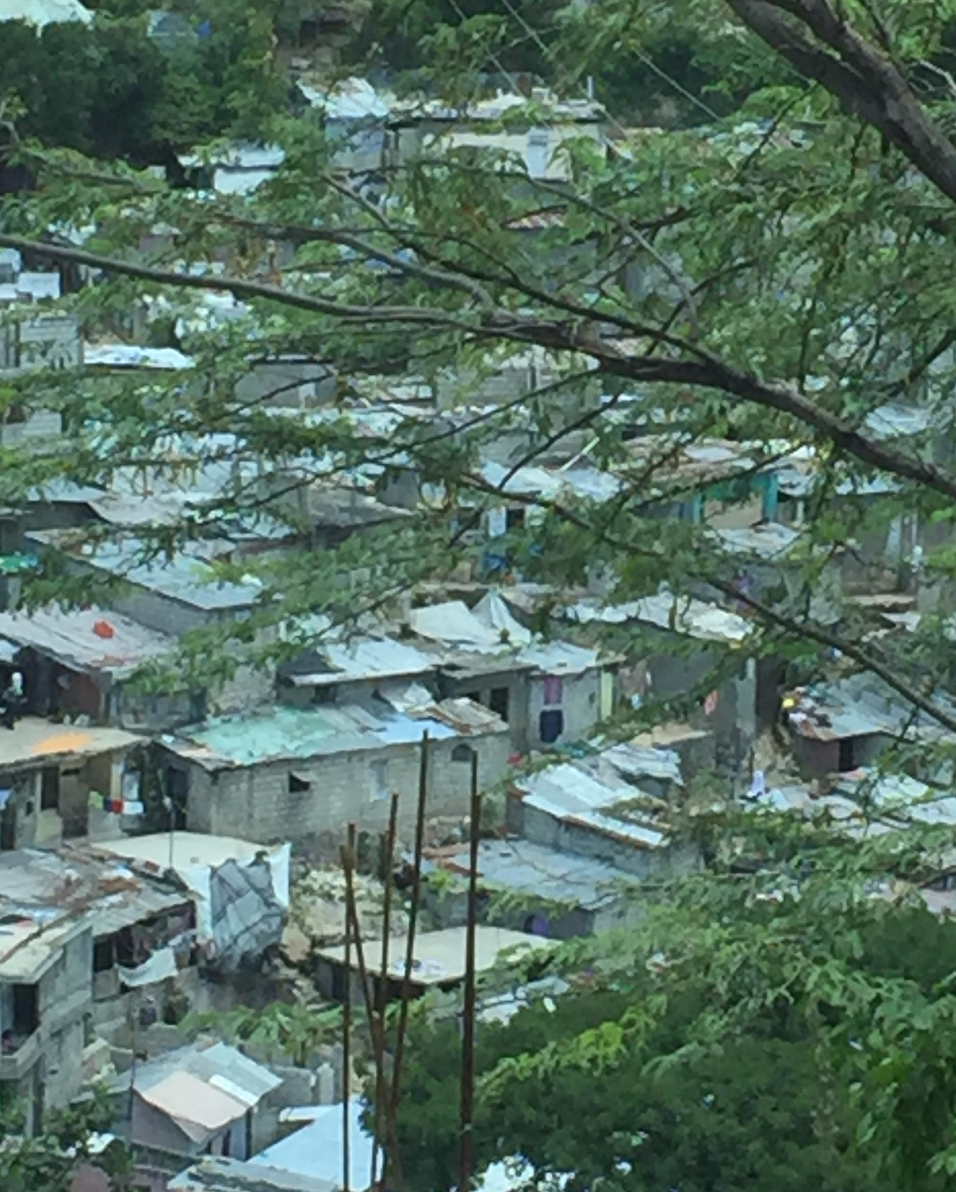
I witnessed a nation struggling under the weight of political instability, natural disasters, widespread poverty, and inadequate international support. Yet I also witnessed something equally powerful—the resilience, determination, and faith of the Haitian people.
Today, Haiti continues to face extraordinary challenges. Armed gangs control or heavily influence large portions of the country, violence remains widespread, and many basic government services have collapsed. These realities have prompted numerous humanitarian organizations and international observers to conclude that conditions remain dangerous for many who would be forced to return.
That is why the recent court decisions involving Temporary Protected Status (TPS) are so significant.
It is important to understand what the courts decided. The Supreme Court did not determine that Haiti is safe. Nor did it conclude that the humanitarian conditions that originally justified TPS no longer exist.
Instead, the Court addressed a different question: Who has the legal authority to decide whether Temporary Protected Status should continue?
In June 2026, the U.S. Supreme Court ruled that the administration could proceed with ending Temporary Protected Status for Haitians and Syrians. The Court concluded that federal law generally limits the ability of courts to review the Department of Homeland Security's decision to terminate TPS. A subsequent federal court ruling allowed that decision to move forward.

TPS was established by Congress in 1990 as a humanitarian program that allows individuals from countries experiencing war, natural disasters, or other extraordinary conditions to live and work legally in the United States until conditions improve. Haiti received TPS following the devastating 2010 earthquake, and the designation was extended repeatedly because instability persisted.
The Court's decision was about executive authority—not about the conditions in Haiti.
The administration argued that federal law gives the Secretary of Homeland Security broad discretion to determine when TPS should end and that those decisions are largely beyond judicial review. Those challenging the decision argued that Haiti remains extraordinarily dangerous and that ending TPS could expose hundreds of thousands of people to serious harm.
The practical consequences are substantial. Approximately 350,000 Haitians who have relied on TPS could lose their protection from deportation and their authorization to work in the United States, depending on their individual immigration status.
This issue is not merely a national debate. It affects North Carolina as well.
According to the U.S. Census Bureau's 2024 American Community Survey, an estimated 20,800 North Carolinians are of Haitian ancestry. They are our neighbors, physicians, nurses, educators, entrepreneurs, journalists, clergy, public servants, and small business owners. They care for our loved ones, educate our children, strengthen our economy, worship in our churches, and enrich communities throughout our state.
The Supreme Court answered a legal question. It did not answer a moral one.
There is an important distinction between what government may do and what government should do. The fact that the executive branch has the legal authority to terminate Temporary Protected Status does not, by itself, justify exercising that authority under the current circumstances.
America has always aspired to be both a nation of laws and a nation of compassion. Those principles need not be in conflict. We can uphold our immigration laws while recognizing the contributions of individuals who have built productive lives in our communities and acknowledging the dangerous conditions that still exist in Haiti.
I have walked the streets of Haiti. I have met families whose daily lives are marked by uncertainty, yet whose hope remains unshaken. Those experiences remind me that immigration policy is not simply about statutes and court opinions. It is about people.
In the end, history will not judge us solely by whether we possessed the legal authority to act. It will also judge whether we exercised that authority with wisdom, compassion, and humanity.
Virgil L. Smith formerly served as president and publisher of the Asheville Citizen-Times and Vice President for Human Resources for the Gannett Company. He is the principal for the Smith Edwards Group and the author of "The Keys to Effective Leadership.” He is the founder and a writer for Carolina Commentary.


Comments